First, fast, furious...Bangladeshi business blog

We provide
--social media strategies for Bangladeshi businesses worldwide
--public speaking on Bangladeshi businesses and social media
--paid product/service/website reviews of Bangladeshi companies

Interested to place an advertisement for your business?
Showing posts with label corporate culture. Show all posts

Monday, May 7, 2012

তাক ধুম তাক ধুম বাজাও বাংলাদেশের ঢোল !

I had the great privilege of taking part in the recent Liveperson Aspire 2012 conference held in Vinopolis near London Bridge in London. In the agenda there was a music session in the end which didn’t leave much for imagination at first as I was thinking that this must be some sort of a live performance of some sort. From all my previous experiences of attending training sessions in Bangladesh and even in the UK – usually anything to do with music always ended up someone or some group of musicians performing live music, song etc. while the crowd mingled around. Sometimes they ended up taking group photos , dinner or heading straight to pub (in UK).

Tuesday, April 10, 2012

Where does your boss sit?

Have you ever thought how it impacts the way you sit in an office floor? More importantly, have you ever noticed how our line managers/bosses are seated relative to other staff and how it conveys certain work place cultures? Traditionally in almost all the companies that I have worked in or visited in Bangladesh are really effective in making clear by way of artefacts, physical boundaries, glass walls, bigger and more comfortable chairs (often wrapped with clean towels) – who the boss around is. There is this invisible space that is being created by virtue of various furniture and demarcations to establish the work place hierarchy. But to what extent that influences the culture that you have in your company? More importantly I am not sure how many companies in Bangladesh take up office interior designing as a professional service and to what extent they consult companies on the setups of office spaces and links to company culture that it nurtures. 

I have worked in office environments where my immediate line manager used to sit next to me, his line manager just opposite where he used to sit and his one next to his right – all just on either sides of a low partition, not exactly a cubicle.  You may argue that line managers need certain privacy when they discuss confidential matters or when they need to entertain important business visitors. But imagine that for all these concerns – you will ideally have dedicated spaces allocated in your office – a private meeting room, confernece call center etc.  I have found that by removing any physical boundaries between you and your high-up colleagues, the artificial distance is removed and transparency, exchange of tacit knowledge and work relationship is increased. 

So next time you are planning to revamp your office set up, think about the culture you want your company to nurture. If you want to be clear about who the boss is and impose a certain degree of distance between you and your employees – go ahead lock up yourself in a private air-conditioned cabin, glass wall or not, order a comfy, bigger, chair and place two or more smaller ones on the other side of your mega desk – so as to be explicit that you have climbed higher up in the organogram to deserve entetaining guests at your desk. Otherwise if you want relationships between employees to be fluid and transparent – remove what is not required. It does not mean that you will be casting the eye of the Big Brother all the time around other people’s monitor to see if they are Facebooking or not – ideally that would mean that either you or your staff doesn’t have much to do in any case and the problem lies elsewhere.  

Monday, September 19, 2011

What's in a name? Part 2

Statutory Warning - All names used in this blogpost are purely fictional and are result of the blogger's fertile but idle brain. Any similarity or resemblance to any person living or dead is purely coincidental and out of pure luck.


It is not true that only women change their names in Bangladesh when they get married and append their husbands' surnames. In some instances, some men also do change their names when they get married - not to their wives - but to their professions in some cases. They become so infatuated with their profession that they not only reflect the change in their names as surnames but as forenames - above and before everything they are eventually called as.

Friday, February 11, 2011

The joy of being served tea and biscuits by Jasim

Wonder if you would agree or not, but one of the silent pleasures of working in a company in Bangladesh lies in the privilege of ordering someone else (usually the office tea boy/girl) for a cup of tea or a black coffee and getting served straight at your desk when you must be crunching numbers with your open excel spreadsheet or are about to start that all important meeting with visitors. I always had full respect for these support service staff but never realised the luxury they used to offer us until I started working full time outside the country. I guess we carry the culture from our households where we grew up seeing our houses being cleaned, food being cooked and cars being driven by ‘others’ who were hired or kept to do such jobs only. So naturally when we get into workspaces, we could not get over that hard-coded habit of ‘being served’ the little refreshments of another day at work.

But honestly, would you really expect the same treatment when you are outside Bangladesh? May be you would silently miss that, like I do, but would you actually go to the extent of bringing someone over from Bangladesh to execute the same responsibilities? I did come across Jasim, the ‘imported from Bangladesh’ tea boy, here in London while attending a meeting owned by a British Bangladeshi gentleman. Most of the workplaces here have a kind of ‘serve yourself’ policy in designated kitchens, or you might see your hosts preparing your desired caffeine option before the start of any meeting. But to my surprise when my host ordered for some tea and biscuits to a nicely dressed young man, he jumped to his routine duty of boiling the water and pouring the biscuits on the plates for us. As I was being served by Jasim, I could not help asking my host how could he afford to have the luxury of having a tea boy in west London for such a small company as his. He explained rather proudly that he had brought Jasim from Bangladesh to offer him a better life. I didn’t ask in detail how exactly he could bring him over. No wonder he wears tucked in shirts and nice trousers but still ends up serving tea and biscuit to his Bangladeshi master. The other Bangladeshi staff at the meeting, young graduates from private universities in Dhaka, jokingly informed me that they also sometimes call for Jasim Bhai’s services as that is what the norm is in Bangladesh, so they feel good when there is someone else to serve them tea or coffee at work – it makes them feel important and in control somehow.

So there you go, order some tea to Jasim, sip it hot in cold cold London, feel good and empowered and continue working.

Wednesday, October 27, 2010

The importance of cha-shingara in doing business

Having worked in an international arena for more than 2 years now, I would honestly admit that I do miss the complimentary food supply that used to be an essential part of most business interactions in Bangladesh. May be its not recognised as a part and parcel of every business entity in Bangladesh, but food does play an important social role in all spheres of life in Bangladesh and may be business settings are not an exception. A glass of water is simply rude and miser, I don't remember not being offered and served atleast a cup of tea or coffee in almost in every business meetings I have ever had in my working days in Bangladesh. In more sumptuous situations, tea or coffee was certainly followed by either a lunch from Boomers or Fakhruddin's Kacchi or some ever green Shingara or samosas.

I doubt if there exists any empirical evidence to prove the importance to serve food or drinks prior or before any business meetings. May be it is related to a large extent a company's corporate culture and more generally to a country's social norms, which penetrates into the business environment. Its therefore hard to claim that it should be a prerequisite to any business dealing or to break the ice and to make every participant be at ease, with their stomachs and taste buds being taken care of. There are examples of countries around the world who have done and who are still doing successful business deals without the involvement of any culinary elements. But somehow I strongly am biased towards the influence of food in every sphere of business in Bangladesh. Even if it mákes you feel drowsy after lunch and even if you fear that it might derail the course of the business conversation, I argue that food and drinks have that inherent power to create that initial bridge or the mental (and stomach) connnection that needs to take place before we can get into serious matters of business. Again, there is no science or management theories behind it - its just an honest confession from a food lover who looked forward to the quality and promptness of any snacks being served or atleast offered - as the indicator of the warmth - fake or genuine - of a potential counterpart.

Life here is different. We meet, shake hands, exchange pleasanteries, settle down and get into business. Even water is may be too expensive to offer during an economic recession in the West. Not that any one is expressing any dissatisfaction towards it, everyone is getting along as if its normal. May be its taken for granted in many business cultures that getting the social tuning right by means of culinary elements is no way a pre-requisite of a successful business relationship, and its true that it works. However, it might be interesting to experiment how people might react to such cross-cultural import of food related tactics in order to establish a social connection first, prior to establishing any solid business connections. After all, we do business with people and its not a sin to mix business with food.

Wednesday, December 9, 2009

What are you smiling for?

I would admit that when I walked into the Banani branch of Standard Chartered Bank in Dhaka, I was not expecting that the lady at the reception would smile and greet me in. As a reflex I also did smile back, quickly lost eye contact and moved on to fill up the pink slips, still thinking in the back of my mind, 'why did she smile at me? Am I looking funny? Does she know me? Do I know her? Have I seen her before somewhere? Which mela? Which mall? Pink City? Bashundhara Mall?'
Nevermind....I noticed slyly if she was extending the same smiling service to all customers who walked in or was I special, or was she suspicious? My brief 'participant observation' established the fact that she was naturally and willingly smiling at almost every customer walking in, depending on her preoccupations from time to time at her workstation. On the other hand, I tried to notice how the 'smile struck' customers were reacting to this smiling receptionist. Majority of the customers who walked in during my half an hour stay were male, students, business men, young and middle-aged men mostly. Other than a handful of them, most of the king customers either remained indifferent or just pretended as if she did not exist in that side of the room. However almost all of them, like me, didn't forget to throw a sly glance at her from different corners of the office space...probably posing the same questions as I did..trying to figure out the mystery of an unknown Bangladeshi woman smiling at unknown men, who she could be, what could be her family background etc. and all those unquenched curiosity, never realising just simply that its the very basic a staff at reception can do....smile, which does not cost anything...every company in the world asks, trains, teaches, preaches their staff to do this...at their customers....but many of them just forget to do it...or just don't do it because of some peculiarities on ground.


Female staff are deliberately kept at receptions not only in Bangladesh but around the world for variety of reasons. Having a sexist discussion would be something to discuss in a different post perhaps, but it is argued that you don't see many female staff smiling at you 'for nothing' when you walk towards the reception at any office premises in Bangladesh. Most of the time I have found staff at reception, both male and female, rather indifferent, cold, uninterested towards whoever is walking in to them. Many times, female staff are not very interested to make eye contacts too...perhaps wary of me smiling at her 'for nothing' :). Well I have heard arguments from both sides on this. Men say that many female staff think that they nearly were crowned Miss World in last year's beauty pageant but due to a twist in fate, they ended up at the wrong place of doing this job at the front desk or at the bank counters. Many also claim that some female executives carry the notion that some male customers might fall in love at first sight if they prefer to smile, act nice and easy with all of them. So to pre-empt and fend off any unsolicited advancement, the female cadre prefer to remain cold and appear as much formal, emotionless as possible.

Female staff on the other hand also argue that due to some peculiar perceptions towards women at work place in Bangladesh, most of the male customers, even colleagues are not 'properly' oriented with how to deal with female staff, colleagues etc. So many of the male customers, colleagues, who sometimes happen to be 'part time losers and lovers in their own right', try to express overflowing emotions of interest, mating and dating in the very first or few instances of receiving so called 'hints' from their female counterparts in the form of smiles, eye contact, showing signs of being comfortable etc. Women at workplace even in developed economies carry an extra burden of consciousness and identity, its no exception in Bangladesh, infact they perhaps carry a heavier load in that respect. However all these are mere hearsays which brings us to ask if there exists or not any research on 'gender issues while providing customer services' in Bangladesh..may be I will ask Parveen Apa.


Have a look at this article which I came across recently which discusses how women can crack the gender code at work place. Its a pretty interesting piece of work where highlights include when the author recommends women to 'dress for success, not for access' at work place (LOL)...also contradictory to what I have been trying to say in this blogpost...the author however advises working women 'not to smile too much' at work place. Not sure if you would agree with all this or not, but its worth giving a thought.


In fine, I think some men at work should realise that there is a right place for everything and every thoughts in the back of the mind...professional environment is perhaps best suited for work related issues only...so better take a casual 'professional' smile as its supposed to be. On the other hand...some women at work better accept the fact that not all approaching men wear dodgy looks and creepy personalities...so its advised to ease up. In the end of the day, it all falls on how one carries oneself...a 'smile' is harmless enough to cause any major trouble...but powerful enough to create that first link of 'putting at ease' with the customer. So smile, smile back and move on. :)))))))))))))))))))))


Image: That is a 'ficture' of a 'bideshi issmiling afa' taken from here


Monday, November 2, 2009

What are you smiling for?

I would admit that when I walked into the Banani branch of Standard Chartered Bank in Dhaka, I was not expecting that the lady at the reception would smile and greet me in. As a reflex I also did smile back, quickly lost eye contact and moved on to fill up the pink slips, still thinking in the back of my mind, 'why did she smile at me? Am I looking funny? Does she know me? Do I know her? Have I seen her before somewhere? Which mela? Which mall? Pink City? Bashundhara Mall?'
Nevermind....I noticed slyly if she was extending the same smiling service to all customers who walked in or was I special, or was she suspicious? My brief 'participant observation' established the fact that she was naturally and willingly smiling at almost every customer walking in, depending on her preoccupations from time to time at her workstation. On the other hand, I tried to notice how the 'smile struck' customers were reacting to this smiling receptionist. Majority of the customers who walked in during my half an hour stay were male, students, business men, young and middle-aged men mostly. Other than a handful of them, most of the king customers either remained indifferent or just pretended as if she did not exist in that side of the room. However almost all of them, like me, didn't forget to throw a sly glance at her from different corners of the office space...probably posing the same questions as I did..trying to figure out the mystery of an unknown Bangladeshi woman smiling at unknown men, who she could be, what could be her family background etc. and all those unquenched curiosity, never realising just simply that its the very basic a staff at reception can do....smile, which does not cost anything...every company in the world asks, trains, teaches, preaches their staff to do this...at their customers....but many of them just forget to do it...or just don't do it because of some peculiarities on ground.


Female staff are deliberately kept at receptions not only in Bangladesh but around the world for variety of reasons. Having a sexist discussion would be something to discuss in a different post perhaps, but it is argued that you don't see many female staff smiling at you 'for nothing' when you walk towards the reception at any office premises in Bangladesh. Most of the time I have found staff at reception, both male and female, rather indifferent, cold, uninterested towards whoever is walking in to them. Many times, female staff are not very interested to make eye contacts too...perhaps wary of me smiling at her 'for nothing' :). Well I have heard arguments from both sides on this. Men say that many female staff think that they nearly were crowned Miss World in last year's beauty pageant but due to a twist in fate, they ended up at the wrong place of doing this job at the front desk or at the bank counters. Many also claim that some female executives carry the notion that some male customers might fall in love at first sight if they prefer to smile, act nice and easy with all of them. So to pre-empt and fend off any unsolicited advancement, the female cadre prefer to remain cold and appear as much formal, emotionless as possible.

Female staff on the other hand also argue that due to some peculiar perceptions towards women at work place in Bangladesh, most of the male customers, even colleagues are not 'properly' oriented with how to deal with female staff, colleagues etc. So many of the male customers, colleagues, who sometimes happen to be 'part time losers and lovers in their own right', try to express overflowing emotions of interest, mating and dating in the very first or few instances of receiving so called 'hints' from their female counterparts in the form of smiles, eye contact, showing signs of being comfortable etc. Women at workplace even in developed economies carry an extra burden of consciousness and identity, its no exception in Bangladesh, infact they perhaps carry a heavier load in that respect. However all these are mere hearsays which brings us to ask if there exists or not any research on 'gender issues while providing customer services' in Bangladesh..may be I will ask Parveen Apa.


Have a look at this article which I came across recently which discusses how women can crack the gender code at work place. Its a pretty interesting piece of work where highlights include when the author recommends women to 'dress for success, not for access' at work place (LOL)...also contradictory to what I have been trying to say in this blogpost...the author however advises working women 'not to smile too much' at work place. Not sure if you would agree with all this or not, but its worth giving a thought.


In fine, I think some men at work should realise that there is a right place for everything and every thoughts in the back of the mind...professional environment is perhaps best suited for work related issues only...so better take a casual 'professional' smile as its supposed to be. On the other hand...some women at work better accept the fact that not all approaching men wear dodgy looks and creepy personalities...so its advised to ease up. In the end of the day, it all falls on how one carries oneself...a 'smile' is harmless enough to cause any major trouble...but powerful enough to create that first link of 'putting at ease' with the customer. So smile, smile back and move on. :)))))))))))))))))))))


Image: That is a 'ficture' of a 'bideshi issmiling afa' taken from here

Saturday, September 5, 2009

Retail Love: Free Bus Service

As a shorts-donning young boy, I used to ask my lungi-donning abba, "If we ever go wearing this to Sonargaon hotel, will they let us in?". Abba used to casually and confidently reply, "If we go wearing a lungi, they might put us in a special cell and never let us in there. But with shorts, you might get in". Same with cars and baby-taxis (CNGs!) I guess. I always used to think that if I ever end up at Hotel Sonargaon by a baby-taxi, the gatekeepers of the then posh hotel would not give me as warm a welcome as I would get if I would have got off a car. One day our pilot Shafiq (our chauffeur) was asked to carry out the week's grocery shopping from Nandan. As a preparation, he then decided to shed his lungi and put on trousers instead, he also insisted that he be allowed to take the car along with him. Upon asking why this ornamental preparation for merely doing a grocery shopping at Nandan, he replied "Bhaiya oigula borolok er jayga, lungi poira ar haita gele dhukte dibo na" (Bro those are places where the well-off shop, they won't let me in if I walk in and that in a lungi'). Funny how even big retail malls such as Nandan might have a perception of being as posh and exclusive as five star hotels, barring entry to those who don't comply with unwritten dress codes or vehicle status quo (no car no entry...wearing lungi no entry).


I wish how nice it would be if Nandan or Agora could come up with their branded mini-buses to ferry customers from different locations of the city (or even from outskirts) straight at the doorstep of their respective retail fortresses. If they are wary of the fact that there are too many free-ride lovers in Dhaka city who might take them for a ride by travelling in the vehicle to go to other destinations or disappearing from the entrances, then they can atleast provide free transport (as free love from the brand) to those customers who have just finished shopping and are waiting frustratingly on the streets to convince a CNG or a stubborn yellow cabbie to take them back to their destinations loaded with a whole range of shopping bags. So say for example a bus could run from the Rifle's Square branch of Agora every 30 minutes to cover areas such as Dhanmondi and Mirpur and selected points en route. Similarly another bus can cover the Gulshan branch and areas such as Uttara or even Gazipur. Shoppers who have made a purchase of a minimum amount (say 100 Taka) míght qualify to get on the buses by showing their proof of purchase.


I think the feeling that the brand cares for the customer even after they are done with the shopping is of great importance. Customers without any private vehicles can shop happily and heavily without the anxiety of how to get back home through the horrifying traffic jams of Dhaka city, worse even if the weather is bad too. As their favorite retail shop has air-conditioned mini-buses stand by every half an hour to ferry them for free.


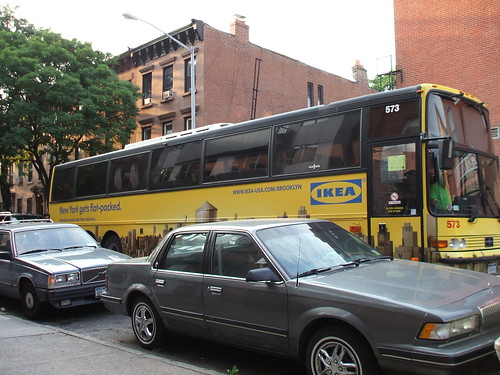
Ikea, the giant world famous retailer of house-hold products provides similar service all around the world to its customers for free and this act of free love from the brand is well appreciated by its customers. As we see branded mini-buses from leading telcos in the city ferrying their employees, we stare and try to see the faces through the tinted glasses of the priveleged employees and wonder how nice it must be to work in those companies. Similarly we will stare at Nandan or Agora branded mini-buses filled with happy customers and keep wondering how nice it must be to shop at those places. Even if the retail shops take you for a ride in terms of product prices, atleast they would offer you a free ride back home with all the shopping. Also, from outside, no one can figure out if the customers had a private car or not, or wearing a lungi or trouser. Provided they let us in in the first place in a lungi, rest can be a happy experience till the end.

Thursday, August 27, 2009

Renaming Customer Services Department

Recently I upgraded my service with Virgin Media by adding a basic TV package on top of existing broadband and telephone facilities. The sales team called me up a week prior installation to congratulate me for 'making the right decision' and for showing my increasing loyalty with the company. They promised me to offer special deals in near future as I have shown signs of a happy and need-oriented customer etc. etc. etc. So far so good, I hung up the phone and decided to wait for the TV package to arrive in due time.


In the following days, however, I had to make some urgent phone calls back to Bangladesh straight from my landline. I was aware of the bills but the circumstances were such that it was justified and there was no other way. My justifications were faced with a surprise shock after 3 days, now from the Collection department of Virgin Media. They first confirmed if I had made the international calls or not, then they urged me to pay 56 pounds immediately, otherwise they said they would block my telephone services! I was at my wit's end aruging with them why would I pay that amount without receiving any bill in the first place. I was frustatingly disputing the fact that it was not even a week that I proved my 'loyalty' by upgrading my service from them and here they were threatening me to block my other services! What a contrast from the same brand. The collection department decided me to hand my call over to the Customer Services Department then and I was greeted by a heavy Midlands accented lady agent.


I was struggling real bad to understand what the lady was saying in the first place, such a heavy accent it was, I was wondering if this was the listening test during my IELTS examination, I would have surely flunked miserably. So I decided to stop the lady and decided to do the talking myself by narrating her my problem. She listened and provided me the most shocking customer service advice possible. She said with her chewing accent that 'since we are a big company, its not possible for us to treat each and every customer based on their loyalty, trends, behaviour etc. I understand that you have decided to upgrade your package from us, however on the issue of the payment of 56 pounds, you will have to pay it, otherwise we will block all your services, as this is our company policy!' I didn't know pretty much what to expect from them after hearing this. I told them finally that I would pay them shit unless they send me a bill and hung up.


First came the individual's email addresses, then came mobile phones and now we have our unique profiles, friend lists in various social media networking websites. How come the companies as big as Virgin Media even think that I, as a customer, have NOT gained the necessary tools such as internet, mobiles, social networks to make my needs unique, thus making me demand individual treatment. Don't they realise that consumers who used to do 'word of mouth' earlier can very easily do 'word of mouse' with just a click and spread the good word or the bad word faster than a Tsunami? I guess its high time that companies consider renaming their Customer Services Department to 'Individual Services Department' as I am not a generic customer/consumer anymore, I am an individual, I have an identity and I hold some sort of power to convince my network of peers/consumers positively or negatively about any brand these days. You can do the same.

Wednesday, August 19, 2009

Lets change roles for a day or two

On the founding day of the school each year something interesting used to happen. Senior bhaiyas and apus used to volunteer to take up roles of various regular teachers in our classes and attempted to teach us regular subjects such as maths, Bengali, science etc. They wore white aprons, as usually worn by teachers and put their name badges as well, to make it look like more professional and real. We used to thoroughly enjoy this welcome change and we knew that the 'one day teachers' also loved this change of role atleast for a day. They realised how tough it was to manage a class of some odd 40 restless, shouting, screaming pupils and at the same time educate them on basic principles of numbers, nature and life around us. They must have also realised how rewarding the feeling might be to in the teacher's shoes for a day and to gain that authority and respect from a full packed class of juniors. Time passed by, but the principles remain same I guess. And that made me ask today if any Bangladeshi company has this culture of role changing from time to time for atleast a day sometime in the year?


Does it ever happen that you walk into the Grameen Phone Customer Service Center say in Gulshan-2 or in Bashundhara City and see Oddvar Bhai (GP CEO) at the counter serving day to day customers? How about coming across Mamun Rashid uncle at the Citibank reception for a day? I guess Rubaba apa could pretty well try being a call center agent for a day and figure out herself how challenging or rewarding being a female call center agent might be, especially if she greets the caller by saying 'Grameenphoney apnake shagotom, ami Rubaba bolchi, bolun apnake kibhabe sheba ditey pari?'. Similarly I guess it must be a good feeling when Akku Choudhury approaches your table at Pizza Hut and asks you how the pizza was or attempts to take your order himself. How about Doma mama (Banglalink CEO) being one of the tea boys for a day in Banglalink and running around kitchens and floors of Banglalink to serve foot-formayesh from other sirs, madams, bhaiyas and afas.


I guess many of our corporate high-ups become too firewalled by their knowledge, busy schedules and ornamental designations that they fall prey to being isolated from lower or mid ranked employees. If the so called intellectual untouchables sometimes perform these corporate stunts once in a while, it does create an impact atleast to new employees to some extent. In the end of the day, all should realise that the person is never greater than the work itself. So there is no harm in finding out how it feels in each other's shoes. And for us simple consumers, its a delight for a day to know that these think-tanks of companies are, far and foremost, meant to serve us only, they have a primary role to serve and interact directly with ordinary consumers from time to time, along with their usual routines of closed door high profile meetings and hotel parties and foreign trips and giving lectures on business management around universities.


It would be nice to know examples of this happening already in Bangladeshi companies. If it does happen in where you work, share it with us here. There might be examples there for others to follow. Lets wear the teacher's apron for a day, lets get to know how a big company is run with apparently small but important roles played by staff who you don't meet perhaps in years. Lets do the job wearing their hat for a day or two.

Saturday, July 25, 2009

Can I have your business card please?

Do you used to collect foreign coins or stamps when you were younger? Remember the joy and pride you used to get while going through your stamp albums or while showing it to your mates? Old habits die hard, or they show up later in life in different forms I guess. When we graduate to become bigger boys from our boyhood (or girlhood) and enter into the corporate arena, have you ever got into the 'hobby' of collecting business cards? From my work experience I have realised that we like exchanging business cards in pretty much every business situations in Bangladesh. Its perhaps a normal business ritual, but I must admit that the quality of business cards produced in Bangladesh is really good. I 'collected' some really well laid-out, well-designed business cards made of quality paper of some quality people to keep as trophies in my business card holders. Especially there were those cards with double fold, triple fold flaps filled with tiny logos of various entities the person was involved in (in different glorious and important roles you know) and even the ones with the person's photo too! The more designations, educational qualifications you have the more important you are right?


However, it is pretty much like the culture of giving salaam first. They say whoever gives salaam first is supposed to be more modest. Its not the same I guess while exchanging business cards in Bangladesh. Those who think they are heavyweights in their business sectors prefer to be asked first for their business cards, then they 'very reluctantly but casually' hand over their glorified business card to the 'seeker'. On the other hand, if you hand out your business card first, it signals pro-active interest in building relationship, however risking the status quo to some extent.


I met the Program Manager of a renowned Bangladesh based NGO, here in London, couple of weeks ago. When I say I 'met' him, it does not mean we talked or anything, but while giving introductions, we knew who we were. During one point of the event, I noticed that the gentleman was very actively in the mission of collecting business cards from people around. I also realised that he was however choosy in selecting his targets. He generally avoided those who more or less looked like him (which included me ofcourse) and preferred to go after fairer executives, participants. Good for him, but it was really interesting to witness his mission of collecting business cards to fill up his album perhaps.


From my interactions with non Bangladeshi business personalities, I have realised that their business cards are not of the best quality. Although their business acumen, experience, expertise speak louder than their low quality, poor design, simple business cards, I thought our printers in Nilkhet do a better job in giving a good impression of self through the business cards. I don't even see these people mentioning their educational degrees, institutions etc. in their business cards, even though they might be graduates from top-notch institutions. Gives you a hint what they focus on...not on the ornamental designations or degrees, but on the experience of the person itself.
I guess there is nothing wrong or right regarding this, its how things are with business cards in Bangladesh.